Paratrooper Commandos: the elite of the French army
The French Army has 20 commando parachute teams, specializing in unconventional warfare. These elite units of the French Army have a glorious past and a formidable organization. A look back at the parachute commando groups, a renowned French unit.
History of the Parachute Commando Groups (GCP)
Originally, these were French Army units specializing in high-altitude jumping. Relatively recent, their creation dates back to 1965. In 1982, for their modernization, these elite units were renamed Commandos Renseignement et d'Action dans la Profondeur (CRAP - Commando Reconnaissance and Deep Action). The only drawback was that this acronym literally means "shit" in English, which slightly discredited these elite units on the international stage. The general staff, realizing this problem, therefore renamed these commandos "GCP" (Groupements de Commandos Parachutistes - Parachute Commando Groups).
A unit with high operational added value
This military expression is often used to describe the men of the GCP. Indeed, their deployment is often airborne, allowing them to obtain valuable intelligence. Sent behind enemy lines, they act discreetly once on the ground. After landing, the common practice is to bury their equipment on site and send the GPS coordinates of the position to their superiors. Thus, if their deep action aims to create a second front, then ground troops will recover the equipment after joining this bridgehead.
On the other hand, if it is only about collecting intelligence, the elite paratroopers may have to retrieve their equipment themselves later. Nevertheless, their ability to carry up to 30 kilos of gear with their parachute is a significant asset for all types of units. Light weapon depots, anticipation of supply logistics, parachute commando groups are extremely versatile, as long as it involves "deep action."
How are the parachute commandos organized?
Today, there are around 200 parachute commandos (give or take a few units). They are organized into 20 teams of 10 people, under the command of the general who leads the 11th Parachute Brigade.
The 20 teams are structured as follows:
- 3 commando teams within the 1st Parachute Chasseurs Regiment
- 3 commando teams within the 1st Parachute Hussars Regiment
- 2 commando teams within the 17th Parachute Engineer Regiment
- 3 teams within the 2nd Foreign Parachute Regiment
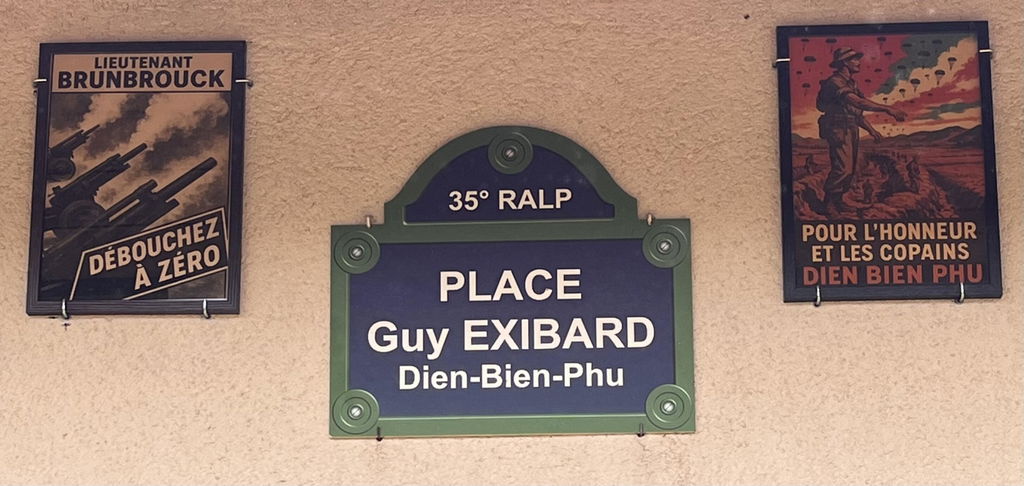
- 2 teams in the 35th Parachute Artillery Regiment
- 3 teams within the 3rd Marine Infantry Parachute Regiment (RPIMa)
- 3 teams within the 8th Marine Infantry Parachute Regiment (RPIMa)
- 1 team in the 11th Parachute Command and Transmission Company
Each type of team has its specificities. Some are particularly skilled with explosives, while others specialize in field intelligence. Some handle logistics and supply, while others are experts in transmission techniques. This complementarity allows for the simultaneous deployment of parachute commando teams that are not accustomed to working together. Thus, they can support each other by serving as relays depending on the objectives to be achieved.

Engagement of Parachute Commandos in OPEX
Today, the GCPs are deployed in numerous operations and missions abroad. They are notably present in the Sahel-Saharan strip, the heart of their operations since the beginning of Operation Serval.
In Afghanistan, the GCP conducted actions aimed at protecting French forces and civilians from insurgent attacks. These actions included preventing ambushes by enemy forces through deep actions behind enemy lines.
However, the continent where the parachute commando groups have intervened the most is undoubtedly Africa. Mali, Chad, Central African Republic, Senegal, Ivory Coast, Congo... Wherever France is involved in peacekeeping, France does not hesitate to quickly deploy these highly mobile elite units. Their effectiveness and ease of deployment to the area are the two reasons that prompt the General Staff to use them.
Responding to a crisis situation: the raison d'être of the 11th BP
The 11th Parachute Brigade (dubbed the 11th BP in military jargon) is specifically tasked with intervening in crisis areas, to be a first response to emergency situations. All parachute commando units are part of this brigade. This explains why France even engages parachute commandos in interventions that are more humanitarian than military. Thus, in Haiti, parachute commandos had to intervene at the time of the earthquake to prevent scenes of violence and ensure peacekeeping.